
Reduce medical errors with the Well-Being Index.
Validated, benchmarked data for CMOs, CNOs and Quality Leaders, from the first assessment to proof of what worked.
Built for CMOs, CNOs & Quality Leaders
How the Well-Being Index helps you reduce medical errors.
Anchor patient safety strategy in validated measurement. Link distress and fatigue data to medical error trends, and get ahead of risk before it reaches a patient.
Validated against medical errors
Find the units where fatigue and burnout put patients at risk.
The Well-Being Index is validated against medical errors, beginning with a national study of 6,994 U.S. physicians. Results show which units, roles, and specialties carry the most distress, the moment they come in.
- Likelihood of burnout and severe fatigue scored at every check-in
- Hotspots ranked by unit, role, and specialty
- National benchmarks for every role
Act before risk reaches a patient
Know where to intervene first.
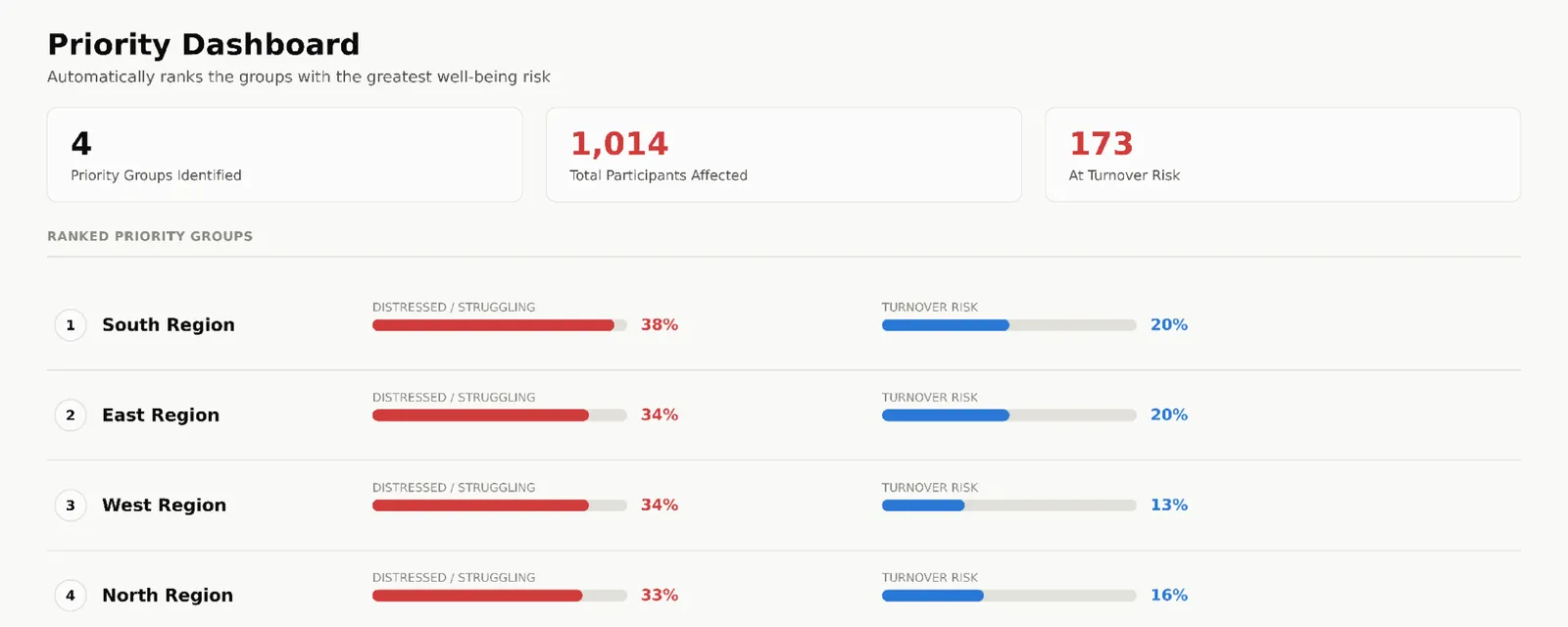
The Priority Dashboard ranks your highest-risk groups and the potential organizational impact behind each one, so quality leaders can line distress and fatigue data up against safety-event trends.
- Highest-risk groups identified and ranked automatically
- Results by department, role, shift, or tenure
- Custom questions to ask about what is driving it
Prove what worked
Show that patient safety work is reducing risk.
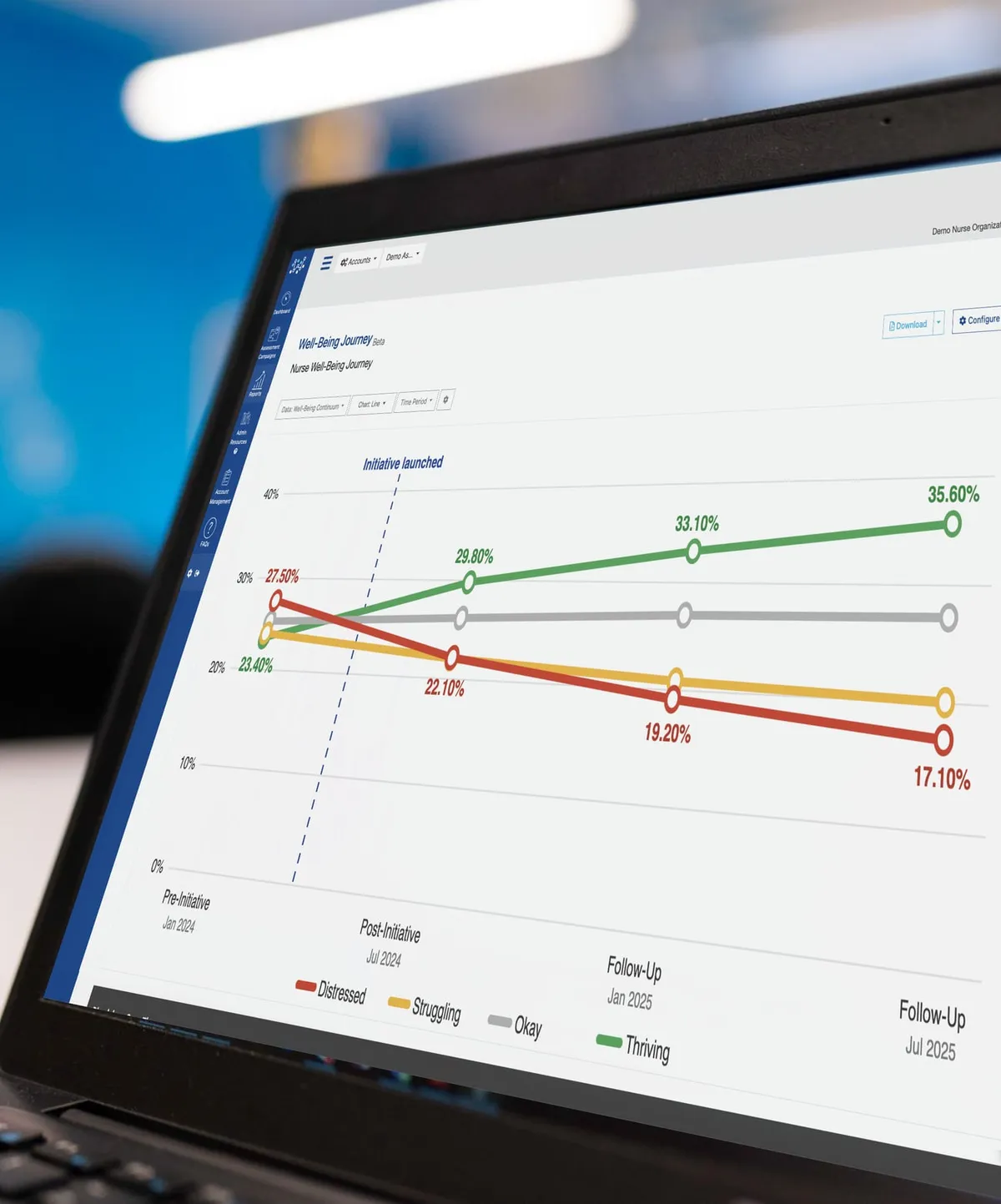
Re-measure with the same validated instrument after every intervention. The Journey report links each cycle, so you can show leadership the before and after.
- Track every group against the initiatives you launched
- Compare across units, roles, and assessment periods
- Joint Commission-aligned, exportable reports
Case study: Weill Cornell Medicine
A quality and safety problem with a well-being root cause.
At Weill Cornell Medicine, the push for physician well-being didn’t start in a wellness office. It started with Dr. Klaus Kjaer, Chief Quality and Patient Safety Officer, who saw that physicians couldn’t take on quality and patient safety initiatives without the bandwidth to do so.

“I couldn’t in good conscience ask our physicians to do all of this quality and patient safety work with no consideration for how they’re doing.”
See how the Well-Being Index would work for your organization.
In 20 minutes, a Well-Being Index expert will walk you through live reports with sample data and map which roles to assess for this goal.
Reduce Medical Errors: common questions
Can the Well-Being Index help reduce medical errors?
Yes. The Well-Being Index links distress and fatigue data to medical error trends, so quality leaders can anchor patient safety strategy in validated measurement and act before risk reaches a patient.
Is the Well-Being Index validated against medical errors?
Yes. The Well-Being Index was validated against outcomes including medical errors, beginning with a national study of 6,994 U.S. physicians published in 2013.
Still Deciding
Not sure which fits?
Most organizations start smaller than they expect — a single department, a residency cohort, or one hospital — and expand once leadership sees the data.
- A single department
- A residency cohort
- One hospital