
Prove wellness ROI with the Well-Being Index.
Validated, benchmarked data for Chief Wellness Officers and Well-Being Leaders, from the first assessment to proof of what worked.
Built for Chief Wellness Officers & Well-Being Leaders
How the Well-Being Index helps you prove wellness ROI.
Replace EAP utilization guesswork with validated distress data. Show which interventions actually moved the needle, and build the board-ready case for next year’s investment.
Start with validated data
Replace utilization guesswork with validated distress data.
See where distress is concentrated across every role, benchmarked against national norms, the moment results come in. Your investment goes where it will matter most.
- A point-in-time Well-Being Snapshot for every group
- Hotspots and Bright Spots surfaced automatically
- National norms for the U.S. and Canada, updated every year
Prove what worked
Show which interventions actually moved the needle.
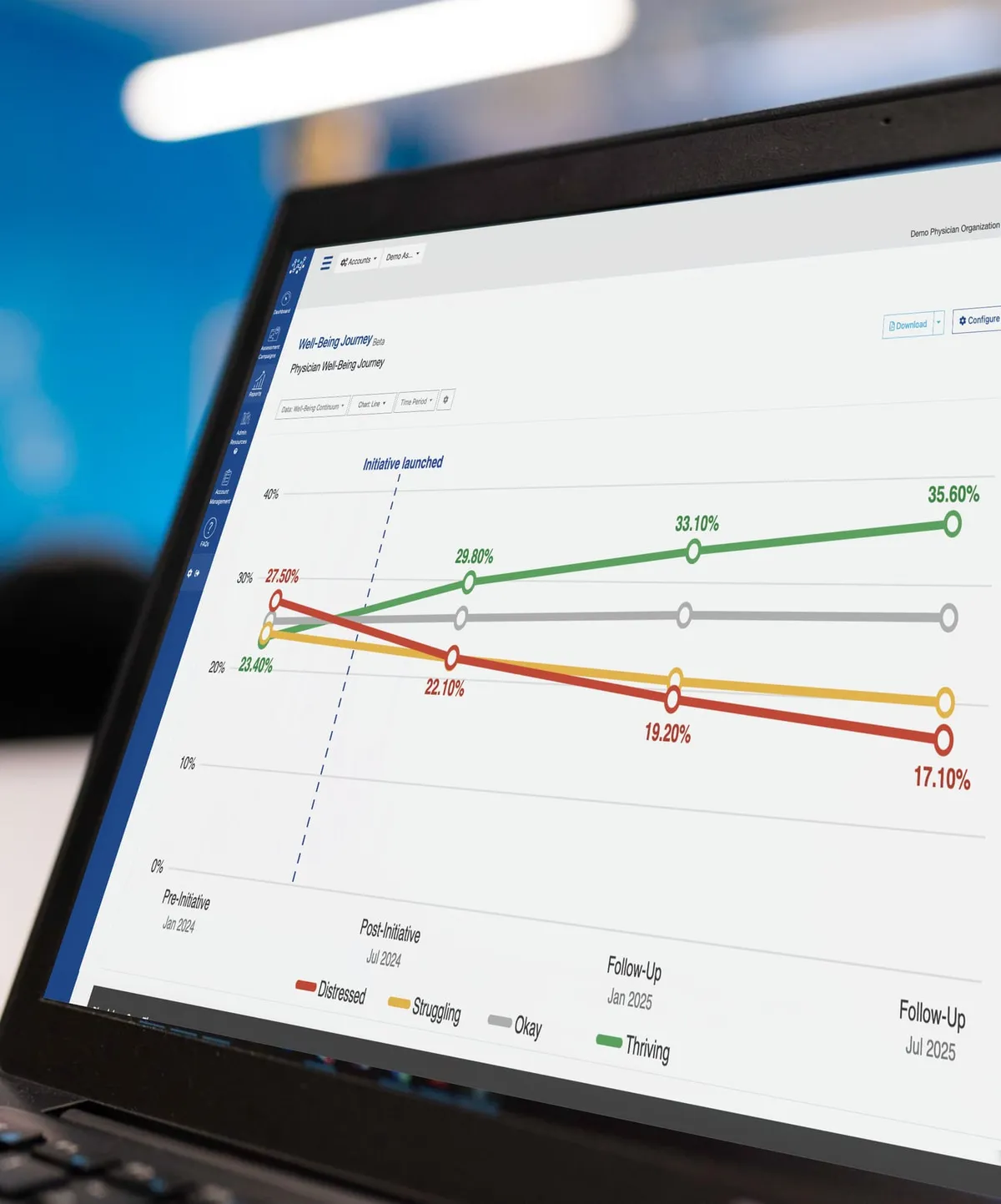
The Well-Being Index is built for ongoing assessment, not a one-time survey. The Journey report tracks every group over time: what changed, for whom, and since when. That is the data that renews your budget.
- Automatic before-and-after linking
- Mark initiatives on the timeline and track every group against them
- Built in, so nothing is stitched together by hand
Build the board-ready case
Make next year’s investment case in numbers your board will accept.
Dignity Health Medical Group reported a 210% return on investment per year and identified $1.9 million in annual attrition cost. Export board-ready reports, and work with experts who help you build the case.
- Board-ready, exportable reports
- Experts who help turn results into action
- A free burnout cost analysis to start from
See how the Well-Being Index would work for your organization.
In 20 minutes, a Well-Being Index expert will walk you through live reports with sample data and map which roles to assess for this goal.
Prove Wellness ROI: common questions
How does the Well-Being Index help prove wellness ROI?
The Well-Being Index measures validated distress data at baseline and after every intervention, and the Journey report links each cycle, so leaders can show what moved the needle and build the board-ready case for investment.
What ROI have organizations seen with the Well-Being Index?
Dignity Health Medical Group reported a 210% return on investment per year and identified $1.9 million in annual attrition cost.
Still Deciding
Not sure which fits?
Most organizations start smaller than they expect — a single department, a residency cohort, or one hospital — and expand once leadership sees the data.
- A single department
- A residency cohort
- One hospital